
Starting your own meditation classes can be an exciting step. You finally have an opportunity to share what you have learned and begin creating meaningful experiences for others.
Then comes the difficult question:
How much should you charge for a meditation class?
Many new meditation teachers worry about charging too much. You may feel inexperienced, want your classes to remain accessible or simply feel uncomfortable asking people to pay for something that feels deeply meaningful to you.
However, charging too little can leave you paying for venue hire, preparation, administration and marketing without being properly compensated for your time.
There is no single correct fee for every meditation teacher. What you charge will depend on the kind of service you offer, your audience, your expenses, your experience and the amount of work involved.
This guide will help you calculate a fair and sustainable price for meditation classes, private sessions, workshops and workplace programs.
Typical Meditation Teaching Rates in Australia
Meditation teaching fees vary considerably according to the setting and type of client.
Meditation Australia publishes the following suggested hourly rates for new meditation teacher graduates:
• One-to-one consultation: from $100
• Community group or not-for-profit organisation: from $200
• School: from $240
• Small business: from $300
• Corporate client: from $600
Higher suggested rates apply to teachers with more than two or five years of experience.
These are guidelines rather than mandatory fees. The final amount you charge should take into account the client’s budget, the preparation required, the size of the group, your experience and everything included in your service.
Meditation Australia also suggests that a teacher delivering regular sessions through a yoga studio, gym or community centre might reasonably receive approximately $90 to $120 per hour.
When you organise and promote a course yourself, however, your pricing also needs to cover venue hire, administration, preparation and other expenses. This means you may need to charge approximately $25 or more per participant simply to cover your costs.
Research Your Local Market
It is helpful to research similar services in your local area before finalising your fees.
Look at meditation classes, yoga studios and other comparable wellbeing services. Consider:
- how much they charge per class
- whether they offer casual bookings, class passes or term fees
- the length of their sessions
- what is included in the price
- whether their classes are delivered online or in person
This research can help you understand the local market, but it should not be your only pricing method. Another teacher may have different expenses, experience, class sizes or business goals.
Calculate your own costs first, then use local pricing as a point of comparison.
What Should Your Meditation Class Price Cover?
Your fee needs to cover more than the hour you spend teaching.
A one-hour class may represent two or three hours of work once you include everything required before and after the session.
Your price may need to account for:
- researching and planning the class
- writing or adapting meditation practices
- communicating with participants
- liaising with the venue or host organisation
- creating promotional material
- managing bookings and payments
- travelling to and from the venue
- setting up and packing away
- providing handouts or follow-up resources
- paying venue and equipment costs
- maintaining insurance and professional memberships
- undertaking supervision and professional development
If you charge only for the visible teaching hour, you can easily end up underpaying yourself.
Teaching Time
Consider the length and complexity of the class.
A simple 30-minute guided meditation will be priced differently from a two-hour workshop that includes meditation, journalling, discussion and teaching.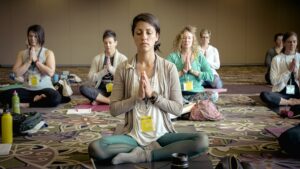
Also consider whether you need to arrive early, stay afterwards to answer questions or allow time for participants to settle safely after the meditation.
The length and format of your class will also influence the price. A 35-minute beginner meditation class may require less preparation and delivery time than a longer session that includes teaching, an extended meditation, journalling, group discussion, a women’s circle or refreshments.
The more time, preparation and inclusions involved, the more your fee may need to reflect them.
Preparation and Administration
Some classes can be delivered using familiar practices. Others require substantial preparation.
A program designed for a workplace, school or specialised group may involve consultation, research and adaptation. Private sessions may require intake forms, individual planning and follow-up communication.
All of this is part of the service you provide.
Venue and Equipment Costs
If you run your own public classes, you may need to pay for:
- room hire
- mats
- cushions
- bolsters
- blankets
- eye pillows
- audio equipment
- tea or refreshments
- printed materials
Some of these will be one-off purchases, while others will be ongoing costs.
Out of pocket expenses
When calculating your expenses, consider whether you will hire a community hall, rent space from a yoga studio or deliver your classes online. You may also need to purchase mats, cushions, bolsters, blankets, eye pillows, audio equipment or other supplies.
These may be initial or ongoing expenses. If you provide equipment and materials as part of the class, their cost should be reflected in your fee.
Marketing and Booking Fees
Your costs may also include:
- website hosting
- online advertising
- graphic design
- email marketing
- printed flyers
- booking platforms
- payment-processing fees
Even relatively small fees can add up over the course of a program.
Insurance and Professional Development
Professional meditation teachers may also pay for insurance, association membership, mentoring, supervision and continuing professional development.
These costs are not attached to one particular class, but your overall income still needs to cover them.
How to Calculate Your Meditation Class Price
A useful starting formula is:
Total class costs + desired payment + contingency ÷ minimum expected participants
Work from the minimum number of participants you can realistically expect, rather than assuming every class will be full.
Step 1: Calculate Your Costs
Write down every direct expense associated with delivering the class.
For example:
- Venue hire: $70
- Booking and payment fees: $10
- Advertising: $20
- Materials and refreshments: $20
Your direct costs would be $120.
Step 2: Decide What You Need to Earn
Next, decide what you would like to be paid for planning, promoting and delivering the class.
Suppose you decide that $180 is a fair payment for your total time.
Your required revenue is now:
- Expenses: $120
- Payment for your work: $180
- Total: $300
Step 3: Estimate a Realistic Number of Participants
Suppose the room can hold 15 people, but you feel confident that at least 10 people will attend.
Divide the required $300 by 10 participants.
Your minimum price would be $30 per participant.
If all 15 places are filled, the additional income helps compensate for previous classes that were quieter, unexpected expenses and the ongoing costs of running your business.
Step 4: Include a Contingency
Bookings can fluctuate, particularly when you are starting.
People become unwell, plans change and some sessions will attract more interest than others. Including a modest contingency can prevent one or two cancellations from turning a class into a financial loss.
Decide on Your Hourly Rate
Once you have calculated your expenses, consider what you would like to earn for the time involved in planning, preparing and delivering the class.
Your hourly rate should not apply only to the time you spend teaching. A one-hour meditation class may also involve creating or adapting the practice, promoting the class, answering enquiries, managing bookings, travelling, setting up and following up with participants.
Meditation Australia suggests a starting rate of approximately $100 per hour for a newly qualified meditation teacher providing a private one-to-one consultation. Group, community and organisational work may be priced differently, depending on the audience, preparation required and full scope of the service.
When setting your rate, consider:
- the total number of hours involved
- your training and experience
- the complexity of the class or program
- the level of preparation and administration required
- what similar professionals charge in your area
- whether your fee is financially sustainable
Your rate should feel aligned with your values, but it also needs to recognise the time, skill and professional responsibility involved in your work.
What to Charge for Different Meditation Services
Different services require different pricing structures. A community class should not necessarily be priced in the same way as a private consultation or workplace program.
Weekly Community Meditation Classes
Community classes are usually priced per participant.
Your price will depend on:
- the length of the class
- local pricing
- venue expenses
- class size
- your experience
- what is included
- the financial circumstances of the community
Research similar meditation, mindfulness and yoga classes in your area. Look at their duration, inclusions and pricing structure.
Market research is useful, but do not simply copy another teacher’s fee. Their venue costs, class size and business model may be very different from yours.
A class that includes meditation, teaching, reflection and resources may reasonably cost more than a short drop-in guided practice.
Private One-to-One Meditation Sessions
Private sessions generally carry a higher per-person fee because the teacher cannot distribute their time and expenses across a group.
Individual sessions may also include:
- an initial conversation about the client’s needs
- personalised meditation practices
- additional planning
- written resources
- email support or follow-up
- notes and administration
Meditation Australia’s suggested starting rate for a new graduate offering a private consultation is $100 per hour.
Your rate may be higher when the session includes significant preparation, follow-up or specialist knowledge.
Be clear about what the client receives and whether your fee applies only to the appointment or includes additional support.
Meditation Workshops and Short Courses
A workshop or structured course should not necessarily be priced as several ordinary classes added together.
A workshop may involve:
- developing original content
- creating presentations or workbooks
- providing refreshments
- hiring a larger venue
- managing registrations
- preparing take-home resources
- offering follow-up materials or recordings
A four-week or six-week course may also provide a more structured learning experience than a casual meditation class.
Calculate the entire cost of developing and delivering the program, then divide it across the minimum number of participants required to make it viable.
Corporate Meditation Programs
Corporate meditation should generally be quoted as a session or program fee rather than a small per-person charge.
A workplace engagement may include:
- meeting with the organisation
- identifying the needs of the team
- customising the session
- preparing a proposal
- travelling to the workplace
- delivering the program
- supplying resources
- evaluating the session
- providing follow-up recommendations
Meditation Australia’s suggested rate for a new graduate working with a corporate client begins at $600 per hour, compared with $300 for a small business and $200 for a community group or not-for-profit organisation.
Corporate rates are higher because organisations generally have larger budgets and often expect a greater level of consultation, customisation and administration.
Do not automatically quote your community-class rate when a business approaches you. Consider the full scope of the project and the value of the service to the organisation.
Online Meditation Classes
Online classes may remove the cost of venue hire, but they still require professional preparation and delivery.
Your expenses and workload may include:
- video-conferencing software
- online booking systems
- email communication
- digital resources
- marketing
- recordings
- technical preparation
- participant support
An online class should not automatically be cheap simply because participants attend from home.
Price it according to the experience and value you provide.
Consider Your Audience And Their Budget
Your audience will also influence how you structure your fees.
A local community class, a not-for-profit program and a corporate workplace session may involve very different budgets and expectations. Community classes are often priced per participant, while organisations are more commonly quoted a flat session or program fee.
Accessibility matters, but it does not mean every audience should receive the same price. You can make thoughtful choices about community rates, scholarship places or sliding-scale options while still charging commercial clients appropriately.
Casual Classes, Class Passes or Term Bookings?
The way participants book can affect both your income and the consistency of your classes.
Casual Bookings
Casual bookings make it easy for new participants to try your class without a large commitment.
However, attendance can be less predictable. A casual class is therefore often priced slightly higher than a session purchased as part of a pass or term.
Class Passes
A class pass offers participants some flexibility while encouraging them to return.
For example, you might offer:

- a five-class pass for $135 or $140
- a casual class for $30
A modest discount of approximately 5% to 15% is usually enough to reward commitment without significantly devaluing your work.
Set clear conditions around the expiry date, cancellations and whether passes can be transferred.
Term Bookings
Term bookings provide the greatest certainty.
Participants pay for an entire four-week, six-week or eight-week program in advance. This helps cover your expenses and reduces the risk of running individual sessions at a loss.
Term bookings can also support participants to develop a more consistent meditation practice.
The disadvantage is that a larger upfront payment may feel like too much commitment for someone who has never attended one of your classes.
You might offer a casual introductory session before inviting participants into a longer program.
Should You Ever Teach Meditation for Free?
There are times when offering meditation teaching without charge may be appropriate.
You may choose to:
- volunteer for a cause you care about
- contribute to a community event
- gain supervised experience through a work placement
- offer a pilot program
- provide a short introductory session
- support a group experiencing financial disadvantage
The important question is whether the free work has a clear purpose.
Be cautious about repeatedly teaching for free simply because you feel uncomfortable naming a price. Your time, preparation, training and professional responsibility have value.
Free sessions can sometimes be useful when developing a relationship with an organisation. However, make the boundaries clear.
Explain what the complimentary session includes, whether it is a one-off arrangement and what your fee would be for any future work.
You might also use a sliding scale, scholarship place or reduced community rate rather than making the entire program free.
Common Meditation Pricing Mistakes
Charging Only for the Teaching Hour
Your price must also reflect planning, administration, travel, setup and follow-up.
Copying Other Teachers’ Prices
Competitor research can provide context, but it does not tell you whether another teacher’s business is profitable.
Calculate your own costs first.
Assuming Every Class Will Be Full
Base your pricing on a conservative minimum number of attendees. A full room should be a positive result, not the only way you avoid losing money.
Offering Excessive Discounts
Discounts can encourage commitment, but they should not make the program unsustainable.
Charging Corporate Clients Community Rates
A corporate program often requires more administration and customisation. It also provides value to an organisation rather than one individual participant.
Price accordingly.
Including Too Many Extras
Recordings, workbooks, refreshments and individual support can enhance your program, but they also require time and money.
Make sure these additions are reflected in your fee.
Charging Only What Feels Comfortable
Your fee should feel ethical and appropriate, but comfort is not a reliable pricing method.
Naming a professional fee may initially feel uncomfortable simply because you are not used to valuing your work financially.
Use genuine calculations rather than setting your price according to fear.
When Should You Increase Your Prices?
Your first pricing structure does not need to remain unchanged forever.
It may be time to review your rates when:
- your costs have increased
- your classes regularly fill
- you have gained significant experience
- you have completed further training
- your programs now include more support or resources
- demand for your services has increased
- your current fee no longer makes the work worthwhile
Review your prices at least once a year.
You do not have to increase them every year, but regular reviews help ensure they still reflect your expenses, experience and the value you provide.
When raising prices, give existing clients reasonable notice and communicate the change clearly. You do not need to apologise for maintaining a sustainable business.
Frequently Asked Questions
How much should a beginner meditation teacher charge?
Meditation Australia suggests hourly starting rates of $100 for an individual consultation, $200 for a community group or not-for-profit organisation, $240 for a school, $300 for a small business and $600 for a corporate client.
These are guidelines only. Your final rate should account for your expenses, preparation, audience and what is included.
How much should I charge per person for a meditation class?
There is no universal fee.
Calculate the total cost of running the class, add a fair payment for your work and divide that amount by the minimum number of participants you realistically expect.
Meditation Australia notes that teachers running their own courses may need to charge approximately $25 per participant per session simply to break even.
Should I charge more for corporate meditation?
Usually, yes.
Corporate clients generally have larger budgets and may require consultation, program customisation, proposals, travel and additional administration.
Quote according to the full scope and value of the work rather than using your community-class price.
How many participants do I need?
This depends on your costs and fee.
Work backwards from the total income required to make the class viable. It is also helpful to set a minimum number of bookings and explain that the class will proceed once that number is reached.
Should I offer discounted class passes?
A modest discount can encourage participants to attend consistently and give you more predictable income.
Avoid discounting so heavily that the pass no longer covers your expenses and teaching time.
Build a Sustainable Meditation Teaching Practice
Pricing meditation classes is not simply about choosing a figure that feels comfortable.
A sustainable price should reflect:
- your expenses
- preparation and administration
- your experience
- the audience you are serving
- the value of the program
- the full amount of work involved
Your first pricing structure will not necessarily be perfect. Begin with a thoughtful calculation, observe how participants respond and review your rates as your skills and offerings develop.
You can still make compassionate choices about accessibility while recognising that your time and expertise have value.
Your fee should feel aligned with your values, but it also needs to reflect your costs, time, experience and the value of the service you provide.
Your pricing structure may evolve as you gain experience, understand your audience and learn what is sustainable. It does not need to be perfect from the beginning.
Make sure you have fun and enjoy the Journey
Building a sustainable teaching practice takes experimentation, but it should also remain meaningful and enjoyable. You are creating an offering that reflects your values, supports your students and allows you to continue sharing this work over time.
ACMM Can Support You At Every step
ACMM supports meditation teachers not only to guide meditation confidently, but also to develop the practical skills required to create meaningful and sustainable work.
Explore our meditation teacher training, learn about our Community Work Placement Program, or discover the ongoing support available through The Ripple Effect.
by Lisa Forde (Originally written by Sammy Wynn for ACMM. Updated in 2026.)
ACMM provides a range of accredited online meditation and mindfulness teacher training options and support, including our Diploma and Community Work Placement Program which supports new meditation teachers to begin or expand their teaching practice.
Download a course prospectus to learn more about your ACMM training options.