Meditation is a practice that has touched human lives for thousands of years, across different cultures, spiritual traditions and ways of understanding the world.
For some, meditation is a deeply spiritual practice. For others, it offers a way to manage stress, cultivate mindfulness, connect with themselves or simply experience a few moments of stillness in a busy day.
And for many, it is a little of both.
One of the beautiful things about meditation is that it can meet people wherever they are.
At the Australian Centre for Meditation and Mindfulness (ACMM), this understanding is central to our approach. We offer non-denominational meditation teacher training, supporting students to become confident, compassionate teachers who can share meditation with people from all walks of life.
But what does non-denominational meditation actually mean? And why is it such an important consideration when choosing a meditation teacher training course?
What Is Non-Denominational Meditation?
Non-denominational meditation is an approach that does not require participants to follow, adopt or identify with a particular religion, spiritual tradition or belief system.
Rather than teaching meditation through one specific religious framework, it allows people to explore meditation in ways that are relevant to their individual lives, experiences and values.
This doesn’t mean that meditation must be stripped of meaning, depth or spiritual significance.
It simply means that no particular belief is required to participate.
Someone might approach meditation as a way to support their mental wellbeing, while another person experiences it as a connection with something greater than themselves.
Another might be drawn to meditation through their existing religious faith, while someone else may have no spiritual beliefs at all.
Each person can engage with the practice in a way that feels authentic to them.
For meditation teachers, this creates an opportunity to welcome a wonderfully diverse range of people into the practice.
Honouring the Ancient Roots of Meditation
Although meditation is increasingly taught in contemporary, non-religious settings, its origins are deeply connected with spiritual and contemplative traditions.
Meditative practices have developed across Hindu, Buddhist, Taoist, Christian, Islamic and other spiritual traditions, each with its own philosophies, methods and intentions.
These traditions have contributed enormously to the rich landscape of meditation we know today.
At ACMM, we believe it is important to acknowledge and respect these origins.
Non-denominational teaching does not mean ignoring the history of meditation or presenting ancient wisdom as something entirely new.
Instead, it invites us to learn about the traditions that have shaped meditation, appreciate their contributions and approach them with cultural sensitivity.
It also encourages us to recognise that certain practices, symbols and teachings carry particular meanings within the traditions from which they come.
We can honour meditation’s roots without asking our students or participants to adopt a particular spiritual path.
This balance of respect, openness and accessibility is an important part of responsible meditation teaching.
Does Meditation Have to Be Spiritual?
This is a question many people ask when they first begin exploring meditation.
The simple answer is no. Meditation does not require a belief in God, a higher power or any particular spiritual philosophy.
Many people practise meditation to develop attention, increase self-awareness, support emotional wellbeing or explore a different relationship with their thoughts.
Others experience meditation as something deeply spiritual, connecting them with a sense of meaning, wonder, compassion or belonging.
Neither perspective needs to diminish the other.
In fact, one of the most meaningful aspects of meditation is that it can allow space for experiences that are difficult to define.
A moment of stillness might feel peaceful, grounding, expansive or deeply moving. The meaning someone gives that experience belongs to them.
As non-denominational meditation teachers, we do not need to interpret those experiences for others.
We can simply support people in exploring their own practice with curiosity, care and an open mind.
Why Inclusive Meditation Teaching Matters
Imagine walking into a meditation class for the first time.
You might be feeling nervous, unsure what to expect or wondering whether meditation is really for someone like you.
Perhaps you have a strong religious faith and want to know whether meditation will conflict with your beliefs.
Perhaps you don’t identify as spiritual and are concerned that you will be asked to engage with concepts that don’t resonate with you.
Or perhaps you are simply looking for a little more peace in your day.
A non-denominational approach can help create a welcoming entry point for all these people.
When we teach without assuming that everyone shares the same worldview, we make space for individual experiences and perspectives.
This may involve using accessible language, explaining practices clearly, offering choices and avoiding the expectation that participants accept particular spiritual interpretations.
For example, rather than asking everyone to connect with a higher power, a teacher might invite participants to explore a sense of connection with themselves, the natural world or something meaningful in their lives.
The intention is not to remove the depth of the experience, but to make room for each person’s own understanding.
Of course, non-denominational teaching is just one part of inclusion. Truly welcoming practice also asks us to consider cultural differences, accessibility, trauma-sensitive approaches and individual needs.
Why Non-Denominational Meditation Teacher Training Opens More Doors
If you are considering becoming a meditation teacher, the way you are trained can influence the environments in which you feel confident sharing meditation.
Learning to teach through a non-denominational framework can be particularly valuable when working with people from different cultural, religious and personal backgrounds.
It can also support teachers who wish to offer meditation in a range of professional and community settings.
These might include:
- Workplaces and organisations, where meditation may be introduced to support employee wellbeing and stress management.
- Schools and educational environments, where inclusive, age-appropriate mindfulness practices may support attention and emotional awareness.
- Community groups and wellbeing programs, bringing people together from different backgrounds and life experiences.
- Healthcare and allied health settings, where suitably qualified professionals may incorporate appropriate mindfulness practices within their scope of work.
- Private meditation classes and workshops, allowing participants to explore meditation without religious expectations.
- Online meditation programs, connecting with people who bring a wide variety of perspectives and needs.
In each of these environments, the ability to communicate clearly, adapt practices and respect individual beliefs is an important professional skill.
Non-denominational teaching offers flexibility, but that flexibility needs to be supported by genuine knowledge and a strong understanding of how to facilitate meditation responsibly.
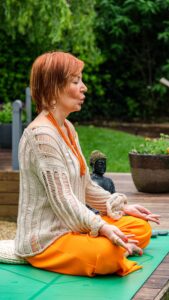 The Difference Between Non-Denominational and Secular Meditation
You may have come across the terms secular meditation and non-denominational meditation and wondered whether they mean the same thing.
They are closely related, but there can be an important difference in emphasis.
Secular meditation is generally presented outside a religious framework and is often taught with a focus on attention, wellbeing, psychological understanding or practical application.
Non-denominational meditation also avoids requiring adherence to a particular religion, but it can allow room for personal spirituality and individual meaning without promoting a specific belief system.
These terms are used in different ways, and there is some overlap between them.
For ACMM, non-denominational is a meaningful description of our philosophy.
We value contemporary science and evidence-informed understanding, while also appreciating the philosophical wisdom, human connection and sometimes mysterious experiences that meditation can invite.
We do not believe these dimensions need to compete with one another.
A student can be deeply spiritual, firmly secular, connected to a particular faith or still exploring what they believe.
All are welcome.
Why Comprehensive Meditation Teacher Training Matters
Being open and inclusive is a beautiful intention, but becoming an effective meditation teacher also involves developing practical skills.
Professional meditation teacher training should help students understand different approaches to meditation, recognise where practices come from and learn how to share them appropriately.
It should also support teachers in considering the diverse needs of the people they guide.
At ACMM, our training goes beyond learning a collection of meditation scripts.
Students explore meditation and mindfulness principles, different techniques, compassionate facilitation, trauma-sensitive approaches, professional boundaries and practical teaching skills.
They also deepen their personal meditation practice, learning to recognise how their own experiences, beliefs and assumptions may influence the way they teach.
This is particularly important for non-denominational teaching.
Our personal philosophy may be deeply meaningful to us, but it will not necessarily reflect the experiences of everyone attending our classes.
A skilled teacher learns to hold their own beliefs lightly enough to make space for the beliefs and experiences of others.
This doesn’t require us to hide who we are. It asks us to teach with awareness, humility and respect.
How ACMM Teaches Non-Denominational Meditation
At the Australian Centre for Meditation and Mindfulness, our training is grounded in the belief that meditation is both deeply personal and widely accessible.
Our approach brings together traditional meditation wisdom, contemporary science, compassionate facilitation and an appreciation for the individuality of human experience.
We encourage students to develop their own authentic teaching voice while learning how to guide meditation in ways that are inclusive, adaptable and professionally appropriate.
Through personal practice, reflective learning, practical assessments and one-to-one mentoring, students develop the skills to teach individuals and groups with confidence and care.
Our students come from a wide range of backgrounds, and we value the different life experiences, philosophies and professional perspectives they bring to their training.
Some feel drawn to meditation through a spiritual journey. Others are interested in psychology, personal wellbeing, education or supporting their communities.
There is no single way to become a meditation teacher.
What matters is developing a sound foundation of knowledge, personal understanding and practical skills, alongside a genuine respect for the people you will guide.
ACMM’s training is also professionally recognised by Meditation Australia and the International Institute for Complementary Therapists (IICT), supporting pathways towards professional membership subject to each organisation’s requirements.
Our aim is to help graduates feel prepared to share meditation in a way that reflects both their authenticity and their professional responsibilities.
Becoming a Meditation Teacher Without Losing Your Authenticity
One concern people sometimes have about non-denominational training is whether they will need to leave behind their own spiritual beliefs or personal connection to meditation.
At ACMM, the answer is no.
We believe your personal journey is an important part of what makes you the teacher you are becoming.
Your values, lived experiences, insights and relationship with meditation can all contribute to the presence you bring to your teaching.
The important distinction is between sharing from your own experience and expecting others to understand meditation in the same way.
A non-denominational teacher can be open about their own perspective when appropriate, while recognising that each participant has the freedom to interpret their experiences differently.
This balance allows us to teach with authenticity without imposing our worldview.
It is possible to be grounded in science and open to mystery.
To appreciate traditional wisdom and embrace contemporary research.
To recognise the spiritual significance meditation holds for some people while ensuring others feel equally welcome.
And perhaps most importantly, to remember that meditation teaching is not about directing someone towards our understanding of life.
It is about supporting them in developing their own awareness, connection and understanding.
Meditation Belongs in Many Different Lives
In a world filled with diverse beliefs, cultures and ways of living, meditation offers a beautiful opportunity to connect through something we all share: our human experience.
We all know what it is to be distracted, overwhelmed, uncertain or longing for a moment of stillness.
We also share the capacity to cultivate awareness, kindness and a more compassionate relationship with ourselves.
Non-denominational meditation teaching creates space for these possibilities without asking anyone to become something they are not.
It honours the depth and history of meditation while allowing the practice to remain accessible to people in contemporary life.
And for those feeling called to teach meditation, it offers a meaningful foundation for sharing these practices with openness, sensitivity and care.
At ACMM, we believe that meditation can be both deeply meaningful and wonderfully inclusive. You don’t need to belong to a particular tradition to experience its value, and you don’t need to adopt a particular spiritual identity to become a skilled meditation teacher.
You simply need a willingness to learn, practise, grow and meet others with genuine respect.
Ready to Explore Becoming a Meditation Teacher?
If you feel drawn to share meditation with others and are looking for training that honours both traditional wisdom and contemporary understanding, we would love to support you.
ACMM offers comprehensive, non-denominational meditation and mindfulness teacher training with individual mentoring, practical teaching experience, trauma-sensitive approaches and professional recognition.
Whether your interests are spiritual, scientific, personal or professional, there is room for your unique perspective within our learning community.
Explore ACMM’s Meditation and Mindfulness Teacher Training
If you enjoyed this article you may be interested in reading:
- Accredited Meditation Teacher Training in Australia: How to Choose the Right Path for You
- What Is the Best Online Meditation Teacher Training Program for Beginners?
- What Is Involved in Becoming a Certified Meditation Instructor?
- Student Success Story: Setting Up A New Healing Centre in Sri Lanka
At ACMM we offer Certificate, Advanced Certificate, Diploma, Community Work Placement and Masters Study Options in Meditation and Mindfulness Teaching and Guiding, with 1:1 mentoring and optional Business Development Support alongside and after your training.
Book a Zoom discovery call with us today to learn more and find out if our courses are the right fit for you – https://acmm.as.me/discoverycall
Frequently Asked Questions About Meditation Safety and Teacher Training
What is non-denominational meditation?
Non-denominational meditation is an approach to meditation that does not require participants to follow a particular religion or spiritual belief system. It allows people from different backgrounds to explore meditation in ways that align with their own values, experiences and intentions.
Can you teach meditation without being religious?
Yes. You do not need to belong to a religion or identify as spiritual to become a meditation teacher. Non-denominational meditation teacher training provides opportunities to learn meditation techniques, understand their origins and develop professional teaching skills without adopting a particular religious framework.
Is meditation a religious or spiritual practice?
Meditation has important historical roots in religious and spiritual traditions, but it is also widely practised in secular settings today. Some people meditate for spiritual reasons, while others are interested in mindfulness, stress management or personal wellbeing. The meaning of meditation can vary between individuals and traditions.
What is the difference between secular and non-denominational meditation?
Secular meditation generally emphasises approaches taught outside religious frameworks, often focusing on practical or evidence-informed applications. Non-denominational meditation does not require adherence to a particular religion but can allow room for personal spirituality and individual meaning. Both approaches can make meditation accessible to diverse groups.
Can I teach mindfulness in schools or workplaces without a religious focus?
Yes. Non-denominational meditation and mindfulness can be taught without religious instruction. However, teachers should ensure their practices are appropriate to the setting, participants’ needs and applicable organisational requirements. Working with children, clinical populations or specialised groups may require additional training, permissions or qualifications.
What are the benefits of non-denominational meditation teacher training?
Non-denominational meditation teacher training can help you develop an inclusive teaching approach, communicate with people from different backgrounds and adapt meditation practices to a variety of settings. Comprehensive training should also include personal practice, ethical considerations, practical facilitation and an understanding of individual needs.
Is ACMM’s meditation teacher training non-denominational?
Yes. The Australian Centre for Meditation and Mindfulness offers non-denominational meditation teacher training that brings together traditional wisdom, contemporary science, compassionate facilitation and practical teaching skills. Students can develop their own authentic teaching style while learning to guide meditation respectfully and inclusively.
Is ACMM’s non-denominational meditation teacher training professionally recognised?
Yes. ACMM’s meditation and mindfulness teacher training is recognised by Meditation Australia and the International Institute for Complementary Therapists (IICT). Students completing eligible training can pursue professional membership pathways, subject to the relevant organisations’ requirements.