There is no single meditation posture that is right for everyone.
You can meditate while sitting on a chair, sitting on the floor, lying down, standing or walking. The best position is one that supports your body, helps you remain present and suits the intention of your practice.
A posture that works well for a short morning meditation may not be comfortable during a longer practice. Your needs may also change with fatigue, pain, injury, pregnancy, disability or simply from one day to the next.
In this guide, we explore the main meditation positions and share practical advice from ACMM teachers about finding a posture that feels both supportive and sustainable.
Is There a Correct Meditation Posture?
Traditional meditation practices often use particular seated positions, but you do not need to sit cross-legged or hold your body perfectly still in order to meditate.
A helpful meditation posture usually has three qualities:
- it feels physically supported
- it allows you to breathe comfortably
- it helps you remain as alert or relaxed as the practice requires
Comfort does not mean that you will never experience any sensation or restlessness. It means that your posture is not creating unnecessary strain or asking you to ignore significant pain.
Your meditation position should support the practice, rather than becoming an obstacle to it.
Mentor Tip Number 1: Experiment with Different Positions
You do not need to use the same posture every time you meditate. Experiment with sitting on a chair, using cushions, lying down, standing or walking. Notice which positions best support different kinds of practice.
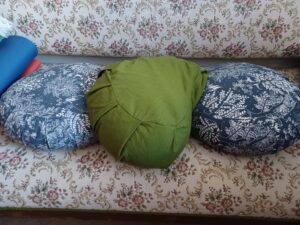
“On the meditation cushion, the couch, on the bus, lying awake in bed, when walking, eating, making a cup of tea, when talking with a friend, getting work done, doing the dishes . These are all great opportunities to return to and experience life as centred presence. ACMM Coach Jen Hill
“I meditate in a few main formal meditation postures:
- ½ lotus in nature on ground
- ½ lotus on a cushion
- Sitting on a chair
- Laying down
- Walking
- Standing” – ACMM Coach Tim James
Comparing positions
Sitting on a Chair
This might involve:
- feet resting on the floor or on a support
- hips level with or slightly above knees where possible
- back supported if needed
- avoid forcing the spine rigidly upright
- useful for alertness, limited hip mobility and longer practices
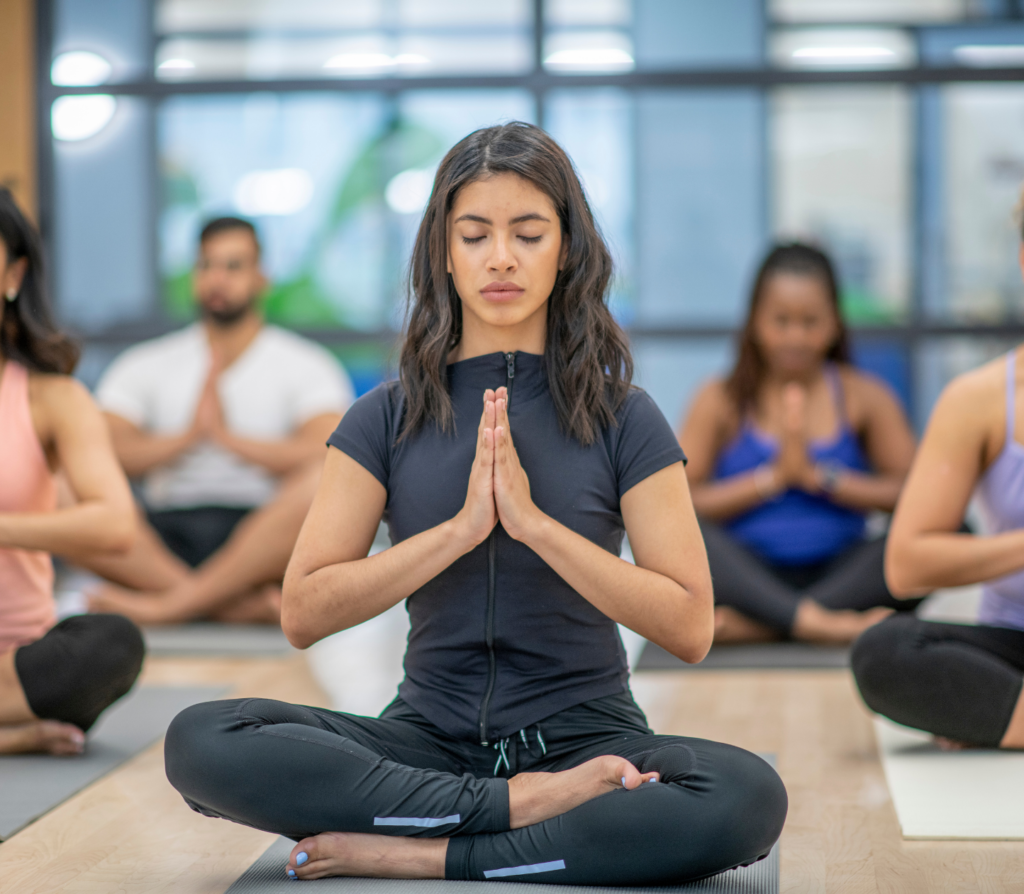
Sitting Cross-Legged on the Floor
This might ,mean:
- use cushions to raise the hips
- support the knees if they remain high
- avoid forcing lotus or half-lotus
- change position if the hips, knees or ankles are strained
Kneeling
You might use a meditation bench, a cushion between your legs or support beneath the knees.
Lying Down
Lying down is suitable for relaxation, pain, illness, fatigue and body-based practices, but may make sleep more likely.
Standing
Standing is useful for alertness, grounding and people who find sitting uncomfortable.
Mentor Tip Number 2: Listen to your body
Meditation does not require you to override your body. Pain, fatigue, injury and physical restriction are signals to respond to, not tests of your commitment.
“At different ages and stages of my life I have experimented with all sorts of meditation postures including cross legged on the floor, sitting on a chair and lying down. Not to mention moving meditations. I encourage people to listen to their own bodies and direct experience since they are the expert on their bodies. There are so many reasons these days why having a flexible approach to meditation position is important. From compassion for the parts of us that experience restriction, fatigue and/or pain to inclusivity of all diverse bodies and needs . Let go of attempting to adhere to traditional or idealised ways of sitting that might be unattainable or exacerbate fatigue, pain or injuries.
Think of what would feel most supportive in that moment for my body and intention for the practice.” – ACMM Coach Morgan Jai Morincome
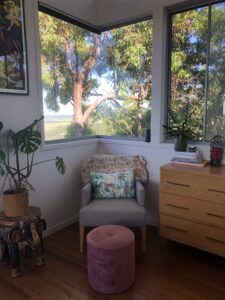
“It depends on the length and type of meditation. If the meditation is longer than 30 minutes, I make sure I sit in a chair, have back support or lie down when needed. I have always suffered from tight hips which has resulted in some pretty painful meditation experiences. I remember attending a Vipassana meditation retreat. By day 3, I was sitting on a mountain of cushions trying to remain sitting cross-legged. Which makes me laugh at how that must have looked!. I felt so ashamed that I couldn’t sit in the ‘traditional’ position. Eventually, I surrendered to my body’s limits and sat in a chair at the back. The bliss! – ACMM Coach Lauren Howe
How to Sit Comfortably During Meditation
If you choose a seated posture, aim for support rather than stiffness.
You may find it helpful to:
- allow your spine to lengthen naturally without forcing it straight
- soften your shoulders, jaw and hands
- keep your head balanced rather than pushed forward
- place your feet firmly on the floor when using a chair
- raise your hips with a cushion when sitting on the floor
- support your knees if they do not rest comfortably
- place your hands wherever your shoulders can remain relaxed
- use a wall, chair back or cushions when additional support is helpful
There is no need to hold your hands in a particular mudra unless it is meaningful or supportive for your practice.
The position should allow your breathing to move freely and your body to remain reasonably settled.
Mentor Tip Number 3: Allow your position to change
It is fine to adjust a cushion, move your legs, change chairs or transition from sitting to lying down. Moving mindfully is still part of the meditation.
“For me sitting and laying sometimes transform into body movement or repositioning into one of the other mentioned positions and some not mentioned. Eg. Prayer position (head bowed with hands to heart, or head towards the ground if outside).” – ACMM Coach Tim James
“Sometimes I start sitting. Then may shift into a standing position for movement and finish lying down. It feels so empowering to flow with the energy of the meditation and my body” – ACMM Coach Lauren Howe
What to Do If Meditation Causes Pain
Meditation should not require you to endure sharp, intense or increasing pain.
Mild sensations may arise when the body remains still, but significant pain is a reason to adjust your position, add support or move into another posture.
You might:
- change the position of your legs
- sit in a chair
- add cushions beneath your hips or knees
- support your back
- shorten the practice
- alternate between sitting and walking
- lie down when appropriate
If pain is persistent or connected to an injury or health condition, seek guidance from an appropriately qualified health professional.
Responding compassionately to your body is not a failure of meditation. It is part of practising awareness.
Mentor Tip Number 4: Let Go of the ‘Perfect’ Meditation Posture
There is no ideal position that everyone must achieve. The aim is not to reproduce an image of meditation, but to find a posture that helps you meet the present moment.
“Wherever I am is a great position for meditation. In the sense that my meditation these days largely involves simply coming back to myself, and resting in that centred, presence of awareness. This can be remembered and reconnected with throughout the day. No matter what I am ‘doing’. So whatever posture I am in is perfect for meditation.” – ACMM Jen Hill
“Informally meditation is an anywhere, everywhere practice too. So all positions involved in the human experience. Eyes open or closed.” – ACMM Coach Tim James
Eyes open or closed?
Closing your eyes can reduce visual distraction and support relaxation.
Keeping your eyes open or softly lowered can help with alertness, grounding and a sense of connection to the room.
There is no requirement to close your eyes. Choose whichever option helps you feel safe, present and comfortable.
Mentor Tip Number 5: Choose a Posture That Supports Your Intention
What is your focus for this sitting?
- seated posture for alert awareness
- lying down for relaxation or body scans
- standing or walking for sleepiness or restlessness
- supported sitting for longer practices
- eyes open where grounding is needed
“Usually, the position I choose to meditate in depends on two factors. The time of day and my intention for the practice . So I always think it’s a great idea to consider this before choosing a suitable position.
If it’s the morning and I would like to remain alert and not too sleepy to go into my day I meditate seated in a chair. I find this is the most comfortable seated position as I have amble back support. This position is great for awareness style meditation such as mantra or breathwork. Where my intention is to maintain complete awareness. I also find this position to be helpful for hurdles such as pins and needles and restless legs. If I meditate in the evening and I’m looking to unwind from my day and sink into relaxation. Then I usually meditate lying down. I find a yoga mat, blanket, and eye pillow to be supportive. Eye pillows are great for helping settle and soothe tired eyes.” – ACMM Coach Sammy Wynn
Try this: Before beginning, ask, “What does my body need, and what is the intention of this practice?”
Find a Meditation Posture That Supports You
The right meditation posture is not the one that looks most traditional. It is the one that allows you to practise with presence, care and as little unnecessary strain as possible.
Your preferred position may change according to the time of day, the length of the meditation, your physical needs and the intention of the practice.
Experiment, use support where needed and give yourself permission to move. Meditation is not about forcing your body into a particular shape. It is about creating the conditions that help you meet your experience with awareness.
At ACMM, our meditation teacher training explores how to guide meditation in ways that are inclusive, adaptable and responsive to the needs of different participants.
Explore our accredited meditation teacher training or book a conversation with our team to learn more.
At ACMM, we offer Certificate, Advanced Certificate, and Diploma Training Options, with optional Business Development Support alongside and after your training.
Download a Course Prospectus today.
With warmth,
Lisa Forde