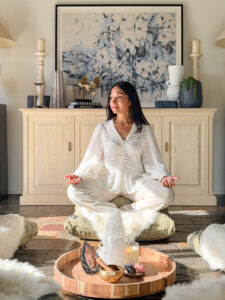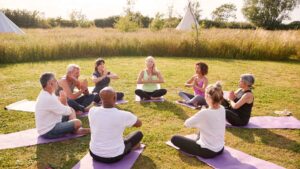
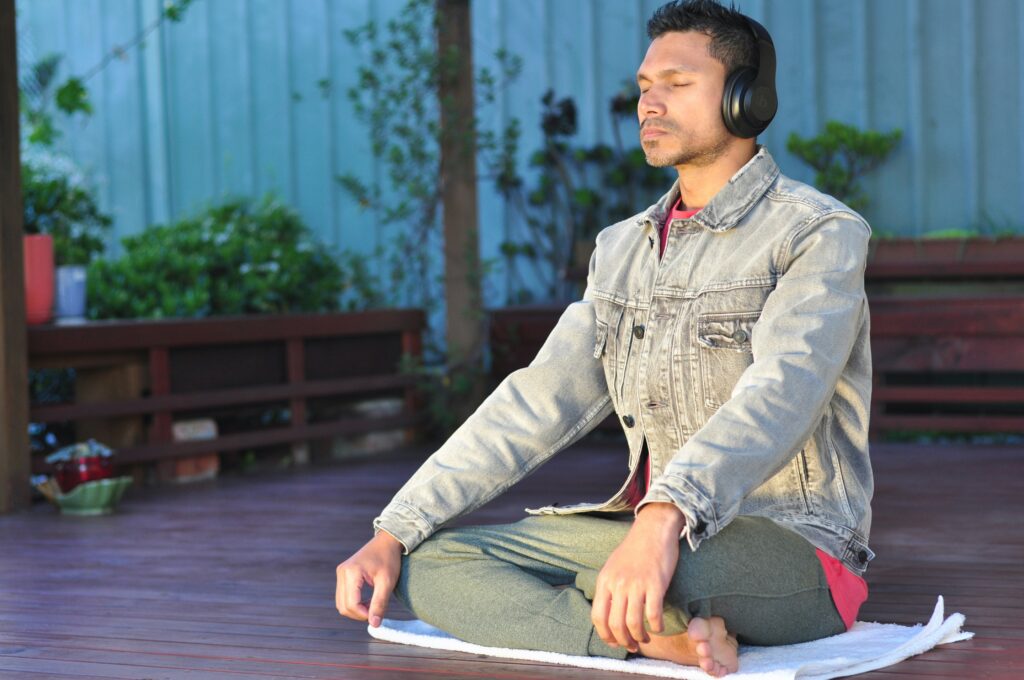
Do you ever have the feeling that “everyone” seems to be meditating now? Well the data is starting to back you up, at least here in our part of the world.
A new nationally representative survey from the Contemplative Studies Centre at the University of Melbourne has found that Australia and New Zealand sit among the highest recorded rates of meditation use globally. In the past 12 months alone, 32.8% of Australian adults (about 6.8 million people) and 24.9% of New Zealand adults (about 1.0 million people) reported meditating. Lifetime use was even higher: 41.5% in Australia and 35.7% in New Zealand.
For anyone considering becoming a meditation teacher, these numbers are more than interesting. They are a signal. Meditation is no longer a niche practice. It is becoming a mainstream self support strategy, and increasingly, a mental health adjacent one.
Meditation is being used where care is hard to access

One of the most important findings was this: people who meditate were more likely to report unmet need for mental health care, suggesting meditation may be functioning as an “in the gap” support when services are overloaded, unaffordable, or not available soon enough.
This is important because it changes the room you are walking into as a teacher. Many students may be coming to meditation because they feel tight, tired, scared, in grief, over stretched, or in need of relief. Sometimes they have words for it but often they do not.
So as teachers, we are asked to hold something very real:
- Meditation as wellbeing and meaning-making practice
- Meditation as coping strategy in the face of distress
- Meditation as a supplement, and sometimes an unintended substitute, for professional support
Which we believe is a reason to be trained.
A compassionate and sober truth that not everyone has a smooth ride in meditation
The study also reported that 21.7% of Australian meditators and 17.6% of New Zealand meditators experienced a meditation-related adverse effect.
The paper also notes that these kinds of effects may be underreported when measured with single survey items, and it highlights the need for better monitoring and clearer professional guidance.
When you read this with a teacher’s heart, the message seems to be that meditation can be deeply supportive, and it can also be activating for some nervous systems, some histories, and some moments of life.
What this means for future meditation teachers

Here are the skills this research calls forward.
- Informed Consent
Using a simple orientations that can help students such as listening to their body, encouraging nervous system friendly approaches and finding resourcing supports. - Choice based guiding as a default
Invitational language that supports autonomy, which is central for nervous system safety. - A clear scope of practice
Meditation teachers can be profoundly helpful without becoming therapists. Clarity and boundaries protects you and your students. - Screening and referral pathways
Even a simple intake question can increase fit. And having a referral list ready is a form of care. - Ongoing education about difficult meditation experiences
As meditation becomes more mainstream, teachers become part of the cultural safety net so training and supervision matter. (You can access supervision at ACMM through the Diploma Supervision Calls) - Trauma sensitive practice is not an option it’s essential
It is vital that meditation teachers are using trauma sensitive principles in their meditation and mindfulness guiding and teaching. Many teacher training courses pay lip service to this, but don’t really offer enough in this area to make teachers really equipped with the skills they need.
Your meditation teacher path
When a third of a country is turning toward meditation, teaching becomes both simpler and more sacred. It is simpler, because the doorway is already open and more sacred, because people will arrive carrying real life, and sometimes real pain, into the practice space.
The invitation here is to become the kind of teacher who can meet that honestly – warm heart, clear boundaries, and a deep respect for the mysterious intelligence of each person’s own experience.
References
- Davies, J. N., Bailey, C., Galante, J., & Van Dam, N. T. (2025). Prevalence and predictors of meditation use in Australia and New Zealand: results from a nationally representative survey. BMC Complementary Medicine and Therapies. https://link.springer.com/article/10.1186/s12906-025-05183-4
- Contemplative Studies Centre, The University of Melbourne. (2025). Representative survey finds Australasians lead the world in meditation use. (News article). https://psychologicalsciences.unimelb.edu.au/CSC/news/new-survey-finds-australasians-lead-the-world-in-meditation-use
- Contemplative Studies Centre, The University of Melbourne. World Meditation Survey. (Research study page). https://psychologicalsciences.unimelb.edu.au/CSC/research/research-studies/world-meditation-survey
- Davies, J. N., Bailey, C., Galante, J., & Van Dam, N. T. (2025). Prevalence and predictors of meditation use in Australia and New Zealand. https://link.springer.com/content/pdf/10.1186/s12906-025-05183-4_reference.pdf
If you enjoyed this article, you might like to read:
- How to Build a Prosperous Meditation Business
- 6 Ways You Can Earn an Income as a Meditation Teacher
- When Passionate Meditation Teachers Connect: Highlights from a Heartfelt Meditation Teacher Networking Event
At ACMM we offer Certificate, Advanced Certificate, Diploma, Community Work Placement and Masters Study Options in Meditation and Mindfulness Teaching and Guiding, with 1:1 mentoring and optional Business Development Support alongside and after your training.
Book a Zoom discovery call with us today to learn more and find out if our courses are the right fit for you – https://acmm.as.me/discoverycall