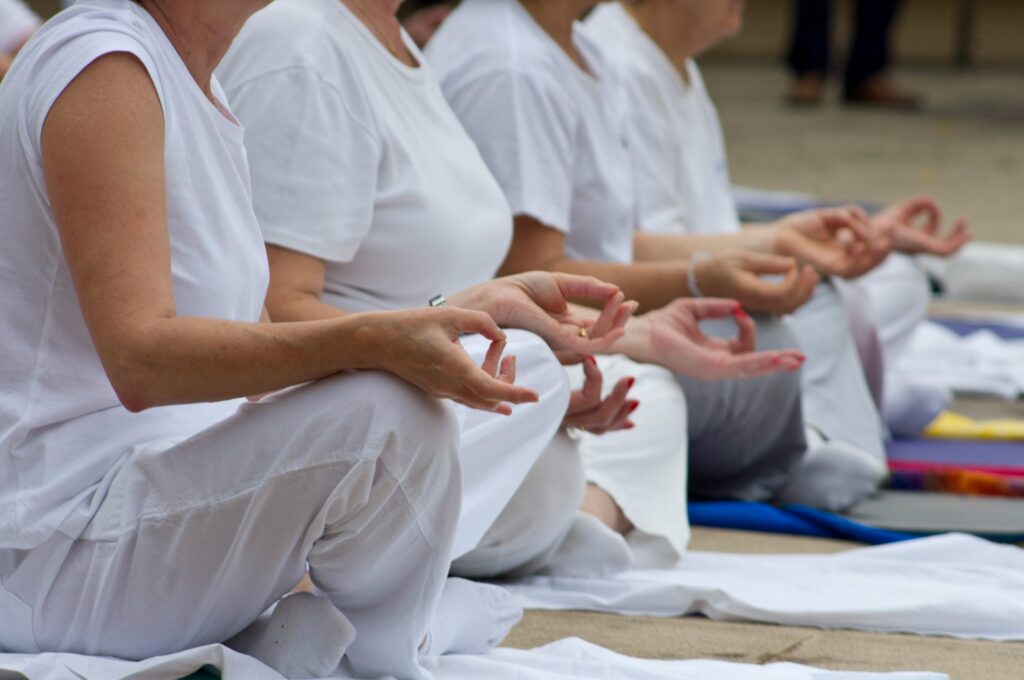
Meditation is no longer happening on the fringes of society. It is being sought out by people living with anxiety, grief, burnout, climate distress, chronic stress, and a deep sense of uncertainty about the future. Many people seek meditation because life can feel overwhelming.
As teachers, we are not only guiding techniques. We are meeting nervous systems shaped by lived experience, history, and sometimes trauma. The way we guide, the language we use, and the assumptions we carry all matter more than ever.
When traditional meditation can be too much
Many classical meditation approaches were developed in monastic or retreat settings, often with long periods of silence, stillness, and inward focus. These practices can be profoundly supportive for some people. For others, especially those with a history of trauma or chronic anxiety, they can be destabilising.
Closing the eyes, focusing on the breath, or turning attention inward can bring someone directly into contact with responses they do not yet have the capacity to regulate. This is why choice is essential. A trauma aware teacher understands that meditation is not one size fits all, and that safety is not created by intention alone.
A simple view of the nervous system

At the heart of trauma aware teaching is an understanding of the nervous system. When the nervous system perceives threat, real or imagined, it moves into survival responses such as fight, flight, or freeze. These are automatic responses designed to keep us alive.
Most people move in and out of these states every day. For someone with trauma, the nervous system may become stuck in heightened alertness or collapse. The range within which a person can stay present, grounded, and connected is often described as the window of tolerance.
Meditation is most supportive when someone is within this window. Outside of it, practices need to focus first on grounding, orienting to the present moment, and restoring a sense of stability.
What trauma aware actually means
Trauma aware meditation is sometimes misunderstood. It means teaching in a way that honours choice, agency, and the body’s wisdom.
A trauma aware teacher:
- Uses invitational language rather than instruction or command
- Offers options for posture, eyes open or closed, movement or stillness
- Understands that grounding may be more appropriate than inner focus
- Paces practices slowly and builds capacity over time
- Normalises stopping, adapting, or stepping out when needed
- Most importantly, it means trusting the student’s experience over any technique.
The ethical responsibility of the teacher
 Meditation teachers are not mental health professionals, and they are not expected to be. However, there is an ethical responsibility to know the limits of meditation and the limits of our role. A trauma aware teacher knows when meditation is supportive and when it may not be appropriate. They know how to recognise signs that someone is becoming overwhelmed. They have referral pathways in place and are willing to pause, adjust, or suggest additional support.
Training for the real world
The world our graduates are teaching in is complex and changing. People arrive to our classes with a history of lived experience with them.
At ACMM, trauma aware teaching is something we teach in our course and we also have our Meditation for Anxiety and Trauma elective available.
Modern meditation teacher training is evolving toward greater care, clarity, and responsibility. Teaching meditation safely is about meeting this moment with wisdom, compassion, and skill. If you feel called to teach meditation in a way that truly supports people as they are, this is the work of our time.
If you enjoyed this article you may be interested in reading:
- How can mindfulness assist with trauma and anxiety?
- 13 Things To Know Before Choosing Meditation Teacher Training
- What Type of Meditation Teacher Is Most in Demand in Australia?
At ACMM we offer Certificate, Advanced Certificate, Diploma, Community Work Placement and Masters Study Options in Meditation and Mindfulness Teaching and Guiding, with 1:1 mentoring and optional Business Development Support alongside and after your training.
Book a Zoom discovery call with us today to learn more and find out if our courses are the right fit for you – https://acmm.as.me/discoverycall